
Rental application fraud isn’t slowing down—it’s evolving.
Across Texas and especially in high-demand markets like Houston, property managers and landlords are seeing a sharp increase in falsified documents, stolen identities, manipulated credit reports, and misrepresented rental histories. What once looked like isolated incidents have become routine attempts to bypass screening systems.
At PrimePointe Property Management, our application standards are intentionally strict—not because we want to make renting harder, but because one bad tenant can cost a landlord tens of thousands of dollars.
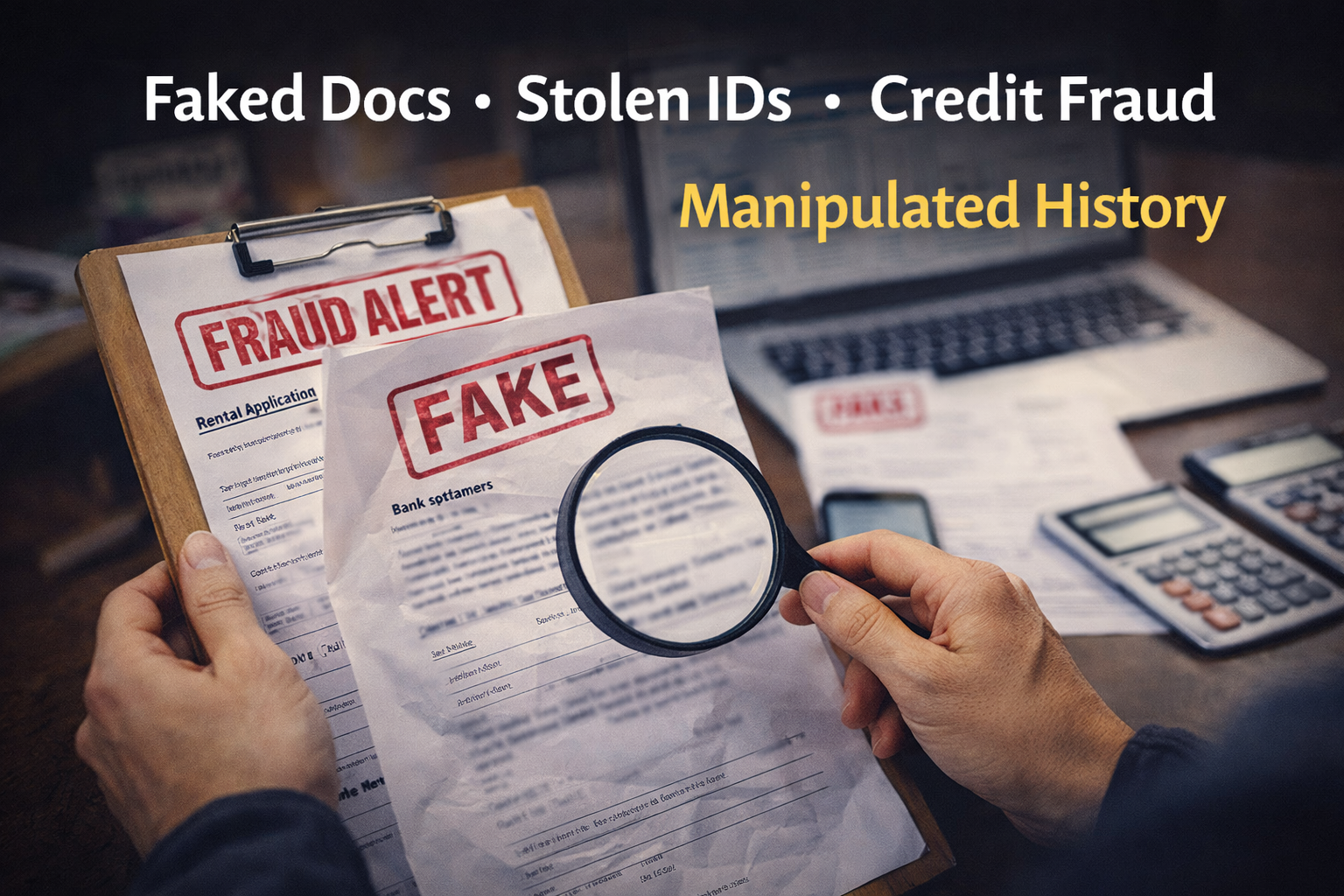
What Rental Application Fraud Looks Like Today
Fraud is no longer limited to fake pay stubs. We regularly see:
Once a fraudulent tenant is in possession of a property, removal is slow, expensive, and risky, even when the fraud is clear.
Why Fraud Hurts Landlords More Than Bad Credit
- Synthetic identities created using partial real SSNs
- Forged employment letters and bank statements
- Fake landlord references that trace back to friends or relatives
- Credit profiles that cannot be verified by reporting agencies
- Applicants applying under one name while payment accounts belong to another
Once a fraudulent tenant is in possession of a property, removal is slow, expensive, and risky, even when the fraud is clear.
Why Fraud Hurts Landlords More Than Bad Credit
Many landlords worry about credit scores—but fraud is far more dangerous than low credit.
A tenant with poor credit but verified identity is predictable.
A tenant with fraudulent documentation is not.
Fraudulent tenants are statistically more likely to:
Why PrimePointe’s Application Standards Are Strict (By Design)
A tenant with poor credit but verified identity is predictable.
A tenant with fraudulent documentation is not.
Fraudulent tenants are statistically more likely to:
- Stop paying rent early
- Abuse eviction timelines
- Leave extensive damage
- Disappear without forwarding information
- Force insurance or legal claims
Why PrimePointe’s Application Standards Are Strict (By Design)
PrimePointe Property Management enforces clear, consistent, and verifiable application standards for one reason: to protect our clients’ investments.
Our process focuses on:
Strict screening is not discrimination. It is risk management.
Consistency Is What Keeps Us Fair Housing Compliant
Our process focuses on:
- Identity verification through trusted screening partners
- Verifiable rental history
- Document consistency across all submitted materials
- Clear minimum requirements disclosed before applying
- Uniform enforcement to remain Fair Housing compliant
Strict screening is not discrimination. It is risk management.
Consistency Is What Keeps Us Fair Housing Compliant
One of the fastest ways landlords expose themselves to legal risk is by making “case-by-case exceptions.”
At PrimePointe:
At PrimePointe:
- Every applicant is held to the same published criteria
- All decisions are based on verifiable data
- Modifications (such as higher deposits or alternatives) are offered consistently
- Adverse actions are documented properly
- Our landlords
- Our tenants
- And the brokerage itself
It’s tempting to relax standards when a property is vacant. But the cost of filling a home with the wrong tenant is almost always higher than waiting for the right one.Fraud prevention is cheaper than:
The Bottom Line
- Evictions
- Repairs
- Legal disputes
- Lost rent
- Insurance claims
- Reputation damage
The Bottom Line
Rental application fraud is increasing, becoming more sophisticated, and targeting landlords who rely on shortcuts.
PrimePointe Property Management remains strict because:
PrimePointe Property Management remains strict because:
- Prevention is cheaper than correction
- Consistency keeps us compliant
- Verified tenants protect your income
- And your investment deserves professional-level safeguards